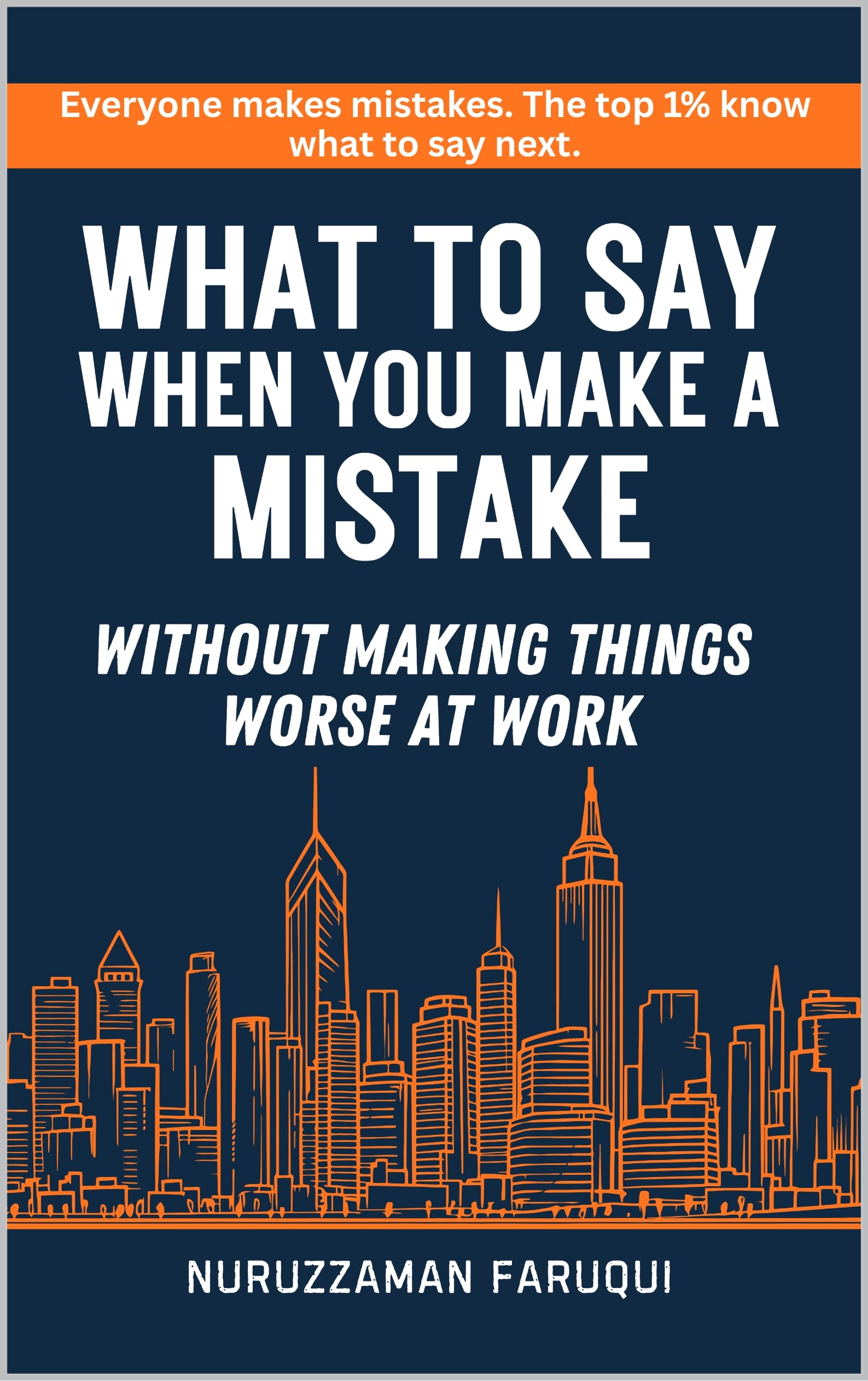
Everyone makes mistakes at work. What separates a small slip from a damaged reputation is usually not the error itself, but what gets said in the next five minutes. My book What to Say When You Make a Mistake: Without Making Things Worse at Work, and its companion Udemy course, are about exactly those five minutes.
Why I wrote it
Most professionals do not struggle with making mistakes. They struggle with handling them: the email that sounds defensive, the meeting where an apology turns into an excuse, the conversation with a manager that makes things worse. Most people know they should take responsibility; they just do not know what words to use.
So instead of general advice, this book gives you ready-to-use language for the moment something goes wrong.
What you will learn
- What to say immediately after a mistake, without sounding defensive or careless
- How to respond in emails and meetings when emotions are running high
- How to take responsibility without over-apologising
- How to handle difficult conversations with managers, teams and clients
- How to stay composed when your mistake is noticed or challenged
- How to protect your professional reputation and the trust you have built
The book and the course work together
The book is the reference you keep at hand. The Udemy course, Communication Skills: What to Say After a Mistake at Work, walks you through the same approach on video, with a simple, repeatable way to respond that works in meetings, calls and emails. It needs no prior experience, only a willingness to reflect on real workplace situations.
Part of a bigger idea
This book builds on my earlier book, Conflict Resolution, which explains the six psychological needs behind most arguments. Mistakes at work often threaten exactly those needs, especially identity and safety, which is why the right words matter so much.
Published December 2025 · Kindle edition · 125 pages